

Getting a Transport Manager Appointment Right
A practical guide to transport manager appointment: eligibility, operator licence steps, legal duties and evidence needed for compliant daily operations.
Compliance Standard:
Maintaining the roadworthiness of commercial vehicles is one of the most critical legal duties placed on UK operators and Transport Managers. Following major updates to the DVSA Guide to Maintaining Roadworthiness, the current rules for commercial vehicle brake testing are being strictly enforced.
The DVSA has moved brake testing away from mere “best practice” to clear, absolute compliance expectations. As of 2026, Transport Managers must ensure the following:
DVSA and Traffic Commissioners focus on whether your brake testing regime is effective for your specific operation. Higher-risk work (high mileage, demanding routes, frequent coupling/uncoupling, abnormal loads) will naturally require a higher frequency of testing. If your vehicles fail at MOT, your "four per year" schedule will be deemed inadequate.
Electronic Brake Performance Monitoring Systems (EBPMS) are now fully recognised as a valid way to evidence brake performance assessment at inspections — but only if managed properly by the transport team.
MOT Point: EBPMS does not replace the MOT brake test. The vehicle must still be presented for the statutory MOT test, including the brake performance element.
1. Laden Roller Brake Tests (RBT)
A laden roller brake test measures braking efficiency while the vehicle is carrying load. This is the most robust and widely accepted method because it provides clear, defensible performance data to the DVSA.
2. Load Simulation (The 2025/2026 Standard)
Load simulation on approved brake testers allows a downward force to be applied to simulate a load without requiring physical ballast. This is now the accepted standard for operators where loading purely for brake testing is impractical or environmentally undesirable.
3. Decelerometer Testing (Limited Use)
Decelerometer tests are generally only accepted where roller brake testing cannot be carried out (for example, certain driveline configurations). This must be supported by a written risk assessment.
Most "unexpected" brake test failures aren't a brakes problem — they're a preparation problem. DVSA's own best-practice guidance is clear that how a vehicle is loaded, cleaned and presented has a direct effect on the result. Here's what actually matters before the vehicle goes anywhere near a roller brake tester.
A laden vehicle gets better grip between the tyre and the roller (or the road), which lets the wheels keep turning longer and lets the brakes reach a higher recorded force. A lightly loaded or empty vehicle has less grip, so a comparatively small amount of brake force is enough to lock the wheel — and once a wheel is locked, the recorded brake force can't increase any further, no matter how hard the brake is applied. That means an under-loaded vehicle can lock its wheels before ever reaching the efficiency it's actually capable of.
This is exactly where the two testing concessions mentioned earlier come from — front wheel lock allowance (FWA) accounts for weight naturally transferring to the front axle under real road braking, and "passing on locks" allows a pass if more than half the wheels on a system lock. Neither should be relied on as a strategy: if the wheels don't lock during the actual test, the vehicle still has to meet the full required efficiency on its own merit. A locked wheel is not the same thing as a good brake.
DVSA's default position is "if you can load it, then do so" — unladen testing is the exception, not a shortcut, and is only accepted for vehicles that genuinely can't be loaded due to their design or the nature of what they carry.
| Designed for / normally carrying | Examples |
|---|---|
| Obnoxious loads | Food, animal or human waste |
| Livestock | Horses, sheep, cattle |
| Fixed plant | White-lining vehicles, road sweepers, access platforms |
| Perishable liquids or contamination-sensitive goods | Liquid/powder tankers, concrete mixers |
| Small or restricted loading access | Catering vans, mobile libraries, bullion vehicles, compactor vehicles (bin lorries) |
| Low load-bearing ability or false floors | Furniture removal vehicles |
| Already near 65% DAW when unladen (not less than 50%) | Compactor vehicles, road sweepers |
Dangerous and hazardous goods vehicles follow separate DVSA inspection guidance rather than this general exemption list.
Source: DVSA, Heavy vehicle brake test: best practice.
Filing a brake test report because it says "PASS" at the bottom is one of the most common gaps we see at Public Inquiry. A Transport Manager is expected to actually read and understand the report, not just check for a pass mark. Based on DVSA's own guidance on interpreting these reports, here's what each part actually means and what to look for.
Your vehicle should be tested laden wherever possible — ideally loaded to at least 65% of its maximum design weight. A report is broken into three parts: vehicle details, the per-axle brake performance results, and a test summary showing whether each brake system passed or failed overall.
This section confirms the vehicle's registration, make and model, the test centre, and its maximum design weight — shown as gross vehicle weight (GVW), gross train weight (GTW), or total axle weight (TAW) depending on the vehicle type. It's worth checking the DTp plate number on the report actually matches your plating certificate; if it doesn't, the whole result could be unreliable.
This is the section most Transport Managers skim past. Each axle is checked against five separate measures, and any one of them failing gets flagged under "Unsatisfactory wheel performance" at the bottom of the report.
| Check | What it measures | When it fails |
|---|---|---|
| Bind | Whether a brake is dragging when it shouldn't be applied (service brake only) | More than 4% of the measured axle weight |
| Time lag | A delay between the brake being applied and it starting to work | Not measured automatically — always shows as a pass unless the assessor overrides it after noticing a lag |
| Ovality | Whether braking effort varies as the wheel rotates (HGV steered axles only) | More than 70% difference between the highest and lowest reading |
| Imbalance | The difference in braking effort side-to-side on the same axle | More than 30% — though this is a genuine early warning sign of a seizing calliper well before it hits that threshold |
| Max force | The maximum brake effort recorded at each wheel | Less than 5% of the measured axle weight, or no brake effort recorded at all |
Imbalance only officially fails above 30% — but if you're passing at 25% or higher, that's still worth investigating and adjusting. Left unchecked, brake imbalance is what causes a vehicle to pull to one side under heavy braking, and today's marginal pass is often tomorrow's PG9 prohibition.
Each axle needs to weigh at least 50% of its design axle weight for the test to count, and ideally 65% or more. If an axle comes in under 65%, the report will show an "insufficient load" message in the summary. If your vehicle passed but this message appears, treat it with caution — your wheels may have locked too quickly during testing to give an accurate result, and you should book a retest with the vehicle properly loaded.
The final section shows total measured weight, which brake systems were tested, the efficiency percentage needed to pass, what was actually achieved, and the overall result. A few specific flags are worth knowing:
This is a practical summary — the full official breakdown, including the separate testing standard for unladen tri-axle semi-trailers, is available from DVSA: Understanding your HGV or trailer's brake test report.
Knowing how to interpret bind, imbalance, ovality and the result flags above is exactly the kind of practical skill that separates a Transport Manager who's ticking a box from one who's actually controlling risk. Our 2-Day Transport Manager Refresher includes a hands-on session on reading real brake test printouts, spotting early warning signs before they become PG9 prohibitions, and managing EBPMS data properly.
If you are a named Transport Manager responsible for maintenance systems, ensuring you know how to read these reports and manage EBPMS is vital. We cover the practical “how” behind these changes in our specialist training:

A practical guide to transport manager appointment: eligibility, operator licence steps, legal duties and evidence needed for compliant daily operations.

Internal versus external transport manager: assess control, cost, competence and licence risk before choosing the right arrangement for your fleets.

Understand DVSA investigation triggers, the evidence examiners may seek, and the practical controls that help operators protect their licence and standing.
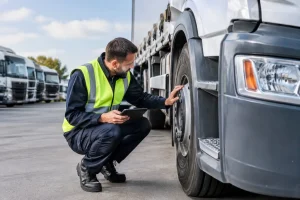
Vehicle maintenance compliance protects your operator licence. Learn how to set effective inspections, defect reporting and maintenance controls. Daily.

Transport Manager CPC exam dates for 2026 and 2027, including Road Haulage and Passenger Transport sittings, online MCQ and Case Study dates, and the latest confirmed timetable from Skills and Education Group Awards.

Understand operator licence financial standing, acceptable evidence and controls that help operators protect their licence and satisfy Traffic Commissioners.
|
Uploaded
Failed
|
 |