
Why Choose Transcom National Training for National Compliance Training
How to Choose a National Compliance Training Provider: 5 Crucial Checks For modern Transport Managers, finding reliable, consistent training across multiple depots is a major

Author: Gareth Wildman — Director & Lead Transport Compliance Trainer,
Transcom National Training
• Reviewed: February 2026
The Transport Manager CPC is achievable — but it’s widely underestimated. This guide explains what actually makes it hard,
which myths cause most failures, and what improves pass chances (especially on the case study).
Most failures aren’t “lack of ability”. They’re underestimating the scope and not practising exam technique,
especially on the case study paper.
Yes — most candidates find it challenging because it’s broad and assessed under strict exam conditions.
It covers legal rules, compliance systems, operational planning and finance/costing.
These beliefs cause most avoidable failures:
Reality: the case study is time-pressured. You need to know where information is and how to apply it. “Open-book” is for confirming specifics, not learning during the exam.
Reality: the exam marks what’s correct and complete, not “how we do it at my yard”. Structure, legal accuracy and evidence are what score.
Reality: UK-only candidates can still see international-related syllabus areas. Skipping them means throwing away marks.
You’re expected to apply knowledge across areas like:
Candidates often “know” the topic but lose marks because they don’t answer the exact requirement.
High scores come from: short, structured answers that hit marking points.
Many UK-only candidates are surprised that they still need to understand some cross-border concepts and documentation.
The safest approach is to prepare across the full syllabus.
Official overview (GOV.UK):
Qualifying as a transport manager
The CPC assessment is typically delivered as two parts (MCQ + case study) and you must pass both overall.
Exact timing, structure and pass thresholds can vary by awarding organisation/sitting — so prepare for the version you’re booked onto.
Awarding body example (for general reference):
SEG Awards (Road Haulage CPC)
These are the habits that reliably move results:
Use tabs to find key sections fast. If it takes you 60 seconds to find a rule, you’ll lose the case study to the clock.
Sit at a desk, set a timer, and finish the paper. Timed drills are how you train pace, not just knowledge.
Write each step. Even if a final figure is wrong, method marks can still be earned if the logic is correct.
If a question is worth 4 marks, the examiner wants ~4 distinct points. Give 4 bullets. No essays.
If you’re qualifying as a Transport Manager, make sure you’re booking the correct route for your operation.
The exam content and scenarios are aligned to your sector — so the “wrong one” is wasted time and money.
If you’re unsure which one applies, start with the GOV.UK overview and match it to your intended operation.
Book the exam(s) you need without buying a full package:
Yes. Most candidates find it challenging because it is broad and tests application under time pressure. Technique and timed practice are the main difference-makers.
Yes. UK-only candidates can still see international-related syllabus areas. Preparing across the full syllabus is the safest route.
Most candidates struggle more with the case study because it tests application, structure and time management — “open book” doesn’t remove that.
Timed practice + bullet-point answers that directly hit marking points. If you want technique coaching, use an Exam Preparation Day.
Choose Road Haulage CPC for goods vehicle operations and PCV CPC for passenger operations (bus/coach). If you’re unsure, use the GOV.UK overview and match it to your intended operation before booking.
Treat the CPC as a professional qualification. Build a plan, practise timed questions, and learn how marks are awarded — especially on the case study.
Official overview (GOV.UK): Qualifying as a transport manager
Awarding body example: SEG Awards Road Haulage CPC

How to Choose a National Compliance Training Provider: 5 Crucial Checks For modern Transport Managers, finding reliable, consistent training across multiple depots is a major

How Hard Is It to Pass the Transport Manager CPC Exam? (Realistic Guide) Author: Gareth Wildman — Director & Lead Transport Compliance Trainer, Transcom National
Driver CPC Rules: The Complete Guide (Dual Licences, Expired Cards & New Rules) By Gareth Wildman (Transport Manager CPC) · Updated: Recently ⚡ Key Takeaways

It is the moment every professional driver dreads. You check your wallet and realize your Driver Qualification Card (DQC) expired three days ago. Or worse—you

UK Assimilated Drivers’ Hours Rules – A Simple Guide for Drivers and Operators Last updated: December 2025 Understanding UK Assimilated Drivers’ Hours Rules If you
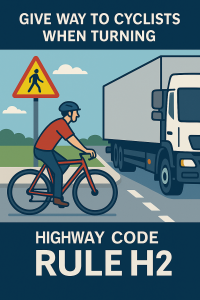
Rule H2 and the Hierarchy of Road Users – What Professional HGV & PCV Drivers Must Know Last updated: 11 November 2025 The Highway