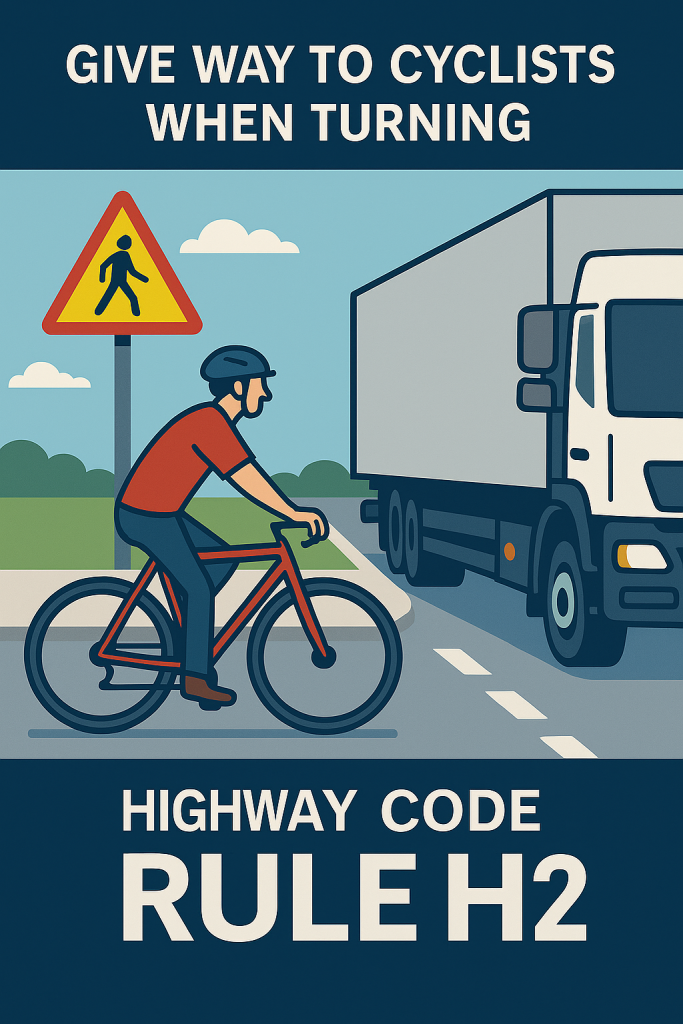
Highway Code Rule H2 & Technical VRU Management for HGV & PCV Drivers
Compliance Standard:
The integration of Rules H1, H2, and H3 into the Highway Code marked a significant shift in legal liability for professional operators. For heavy vehicle drivers, understanding the technical nuances of Vulnerable Road User (VRU) protection is now a fundamental requirement of the Accident Awareness and VRU Driver CPC module.
Resource Access: You can find the latest digital version of the Highway Code and other essential road safety guides on our Downloads and Resources page.
The Technical Framework: Rule H1 (Hierarchy of Responsibility)
Rule H1 is a Hierarchy of Responsibility based on the potential to cause harm. For an HGV at 44 tonnes, the "Duty of Care" is technically higher than that of a car driver. In the event of a Public Inquiry, a Traffic Commissioner will look for evidence that a driver was trained specifically on this hierarchy as part of their periodic Driver CPC training.
The VRU Hierarchy of Vulnerability:
- Category 1: Pedestrians. This includes children, older adults, and individuals with disabilities. Rule H2 specifically gives this group priority at junctions even when waiting to cross.
- Category 2: Cyclists. Including e-bikes and those using shared-use paths near junctions.
- Category 3: Horse Riders. Drivers must yield a minimum of 2 metres clearance when passing horse and rider.
- Category 4: Motorcyclists. Often overlooked in filtering scenarios, motorcyclists require the same "lateral clearance" focus as cyclists under Rule H3.
Rule H2 – Statutory Priority at Junctions
Rule H2 dictates that at a junction, drivers should give way to pedestrians crossing or waiting to cross. This applies to side roads, depot entrances, and retail park access points. Re-training on these specifics is essential for managers during their Transport Manager 2-Day Refresher to ensure driver briefings remain accurate.
Technical Management of Lateral Clearance:
- Pedestrians: Leave at least 2 metres of space when passing at speeds up to 30mph.
- Cyclists: Rule 163 requires at least 1.5 metres (5 feet) when overtaking at speeds up to 30mph. For professional HGV drivers, 2 metres is the recommended "Safety Buffer."
- The "Dutch Reach": Under Rule 239, drivers should use the hand furthest from the door to open it, forcing a look over the shoulder for passing cyclists.
Rule H3 – Overtaking and Junction Intersection
Rule H3 forbids drivers from cutting across cyclists or motorcyclists when turning. In busy urban corridors, this requires advanced "Mirror-Signal-Manoeuvre" (MSM) discipline. Insurance investigators will specifically check for adherence to these standards when assessing liability.
| Hazard Type | Technical Mitigation Requirement |
|---|---|
| Filtering Cyclists | Scan nearside blind spots immediately before steering. Assume a VRU is present. |
| Left-Turn Conflict | Do not overtake a cyclist within 50 metres of a left turn. Hold back and allow them to clear. |
| Tail-Swing Risks | Ensure trailer swing does not intersect with pedestrians waiting near the kerb edge (Rule H2). |
Vulnerable Road Users (VRUs) & Bridge Strikes
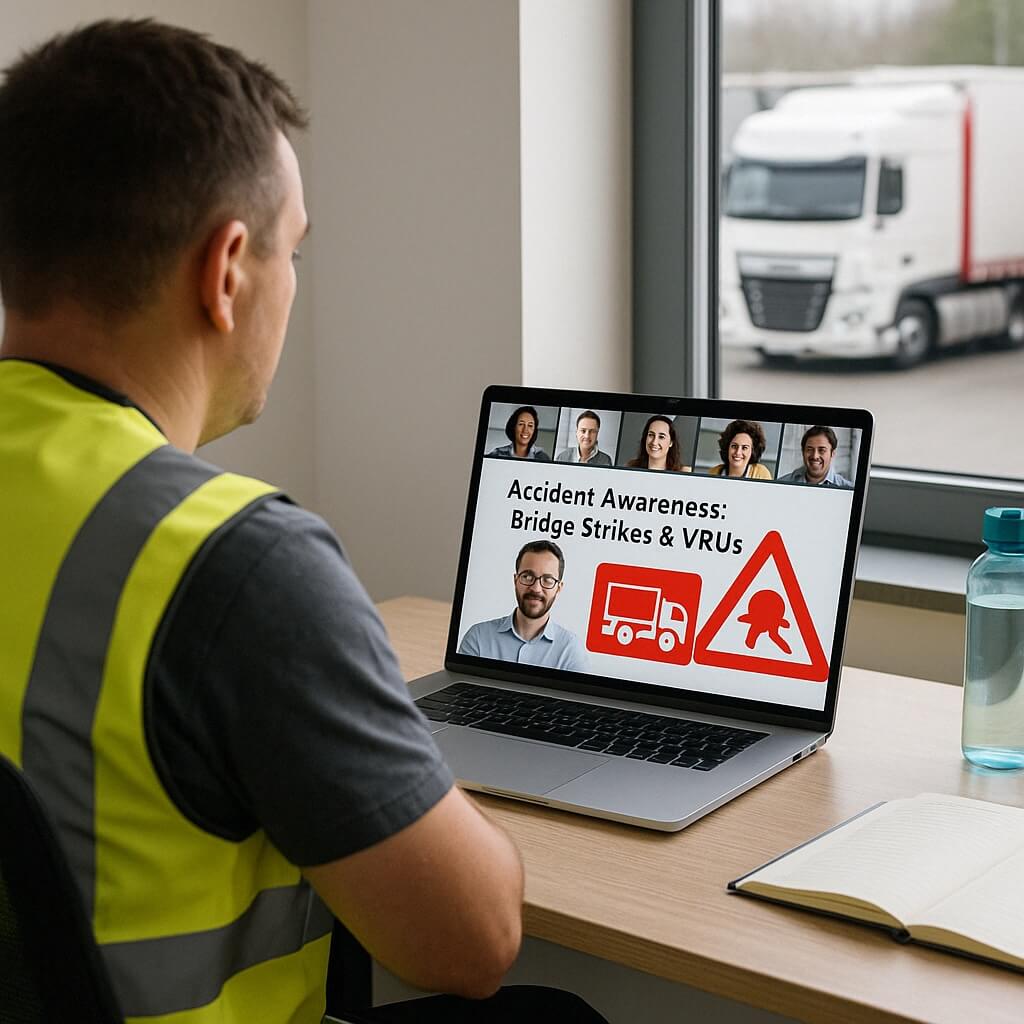
There is a strong link between VRU safety and Bridge Strike prevention. A driver distracted by a complex urban environment (scanning for VRUs) is statistically more likely to miss a low-bridge warning sign. Our integrated Bridge Strikes and VRUs module addresses this "cognitive load."
Book Your 2026 Driver CPC Online
Transcom National Training provides live, interactive training via Zoom with same-day DVSA uploads. Our technical focus ensures your drivers are prepared for real-world enforcement scenarios.
Key Legal Takeaway: The bigger the vehicle, the bigger the responsibility. Professional adherence to Rule H2 is a non-negotiable standard for road safety and Operator Licence protection.