
What Transport Regulation Changes Mean for Operators
Transport regulation changes can expose gaps in fleet controls. Learn how UK operators should assess duties, evidence action and protect their licence.

A letter from the Traffic Commissioner rarely arrives out of nowhere. Most operators do not lose control overnight. Standards usually slip through weak maintenance discipline, patchy defect reporting, poor driver-hours follow-up, scattered records, and the false comfort of thinking that nothing bad has happened yet. By the time OCRS worsens, a prohibition lands or correspondence arrives, the weaknesses are often already embedded.
Once formal correspondence arrives, the conversation has already changed. The issue is no longer whether your systems might be weak. The issue is whether those weaknesses can now be evidenced, explained and defended. That is a much harder position to be in.
A lot of operators only start examining their records and management controls properly after a trigger event. That might be worsening OCRS, poor MOT performance, roadside attention, repeated defects, or simply the growing feeling that no one is fully confident what an external review would find. If you have not yet read our wider guide to operator licence compliance standards, it is worth reading alongside this article.
It is also worth understanding the official position on being called to a public inquiry and the GOV.UK guidance on operator compliance audits. Both make the same basic point in different ways: weak systems become much harder to deal with once scrutiny has already started.
A compliance health check is not about creating panic. It is about finding weak systems while there is still time to tighten them up before they become something more serious.
Weak inspection planning, patchy rectification records, inconsistent defect reporting and poor documentary discipline often stay hidden until there is a deeper review. Once they are exposed, they rarely look like isolated issues. The same applies to daily vehicle checks, which is why proper walkaround checks matter far more than many operators realise.
Downloads, reports and software do not prove control on their own. If infringements are not being properly reviewed, challenged and followed up, the paperwork may exist but the management evidence is still weak. That is why a current understanding of drivers’ hours rules is still critical.
Missing signatures, unexplained gaps, inconsistent filing and weak audit trails all make a bad position look worse. They suggest that the operation is not under proper control, even where the underlying issue may have started smaller.
One of the most common problems is not one catastrophic failure, but the slow drift that happens when no one is clearly owning standards, checking whether systems are actually being followed, or challenging slippage early enough.
Smaller fleets can look less exposed simply because there is less volume. That does not mean the underlying controls are strong. In many cases, they are just less tested until something starts to go wrong. That is also why Operator Licence Awareness Training can be useful before standards start drifting.
Growth, staffing changes, subcontracting, more vehicles or more pressure on deliveries can all leave old systems behind. What once looked adequate can quickly become too loose for the operation you are actually running now. That is often when the difference between a specialist provider and a generic training broker starts to matter, which is why our view on brokers versus specialists is relevant here.
Compliance is often treated like an overhead. In practice, the operators running the tightest systems are usually the ones running the most efficient operations too. Weak systems do not just create regulatory exposure. They create waste.
The cost of running compliant systems is usually far lower than the cost of not running them.
Good repute is not just a regulatory requirement. It is a professional asset that can take years to build and far less time to lose.
A compliance health check or independent audit does not erase weak systems. What it does do is give a clearer picture of where the operation stands, where management control looks vulnerable, and where action needs to be taken before problems harden into findings.
It also puts you in a more defensible position than simply assuming everything is fine because no one has asked difficult questions yet. If you are thinking specifically about your own role, read You’ve Passed the Transport Manager CPC — Now the Real Responsibility Begins and, if you already hold the qualification, consider whether a Transport Manager CPC refresher would help tighten your current knowledge.
Good repute is easier to protect than it is to restore.
Not every operator needs the same depth of review. Some need a lower-cost desk-based compliance health check to identify obvious weaknesses in records, systems and management controls. Others need a more detailed on-site operator compliance audit because the operation is larger, busier or already looks more exposed.
The important point is not to wait until someone else is the first person to look closely. If you are still at the setup stage, our step-by-step guide on how to apply for an operator licence is worth reading alongside our application support page.
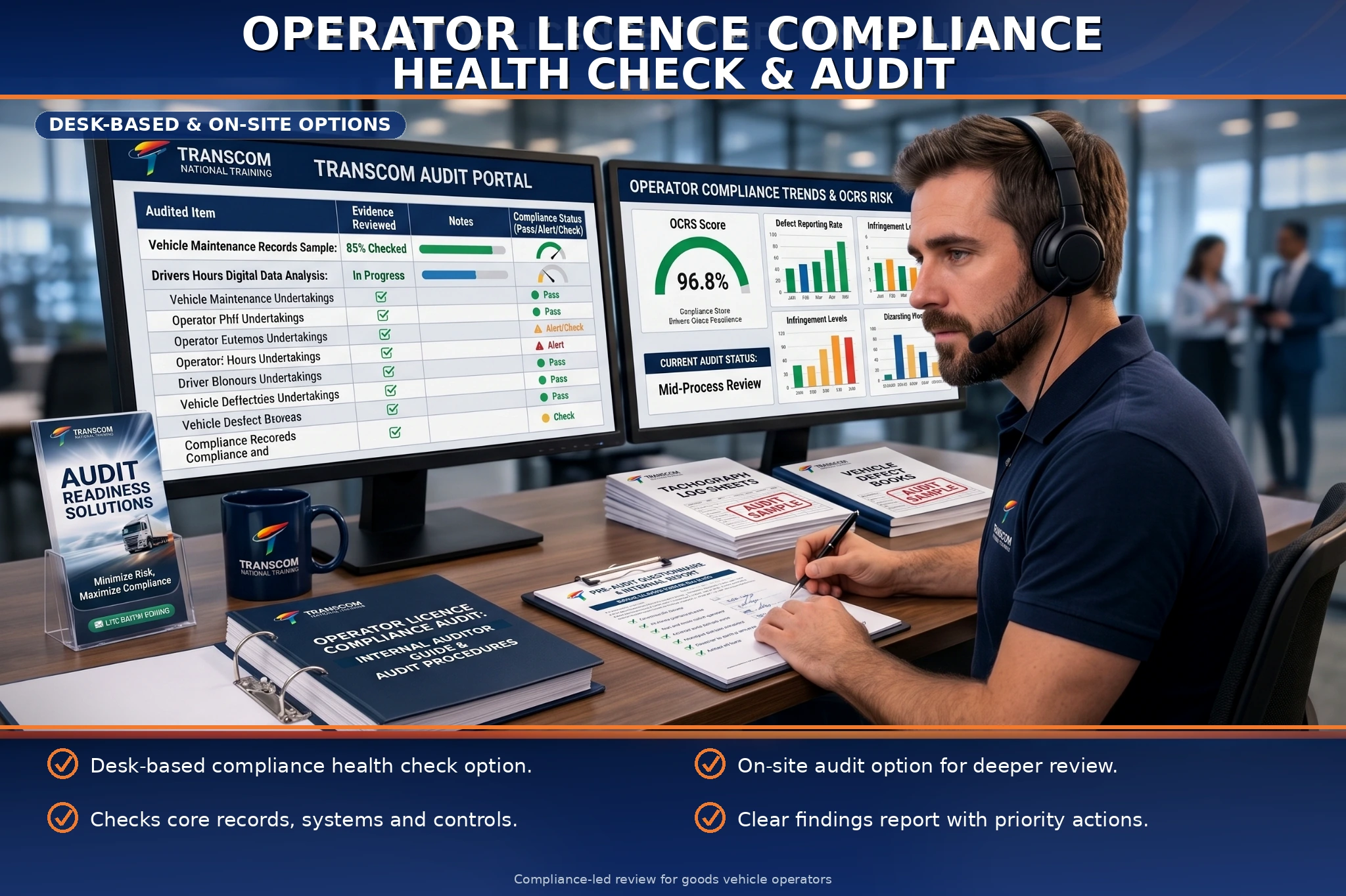
A compliance health check helps operators identify weak systems, poor records and management gaps before scrutiny becomes harder to manage.
If you want to avoid being caught off guard by a letter from the Traffic Commissioner, start with the most relevant support option below.
Where appropriate, operators facing formal regulatory proceedings should also consider obtaining independent legal advice.
Transport regulation changes can expose gaps in fleet controls. Learn how UK operators should assess duties, evidence action and protect their licence.

Who needs a transport manager? Learn when UK operator licence rules require professional competence, a named TM and practical control of fleet compliance.

Maintenance record retention protects your operator licence. Learn what to keep, for how long, and how to build an audit-ready system for your fleet today.

Understand restricted licence conditions, how they affect daily operations and the evidence needed to protect your UK operator licence during an inquiry.

Strengthen tachograph compliance through clear checks, accurate records and accountable management that protects your operator licence on every journey.

Compare a standard versus restricted licence for UK goods operators: scope, transport manager rules and the compliance duties that protect your licence.