Apply for an Operator Licence: Get the Application Right Before You Submit
Applying for an operator licence is not just filling in an online form. The Traffic Commissioner needs to see that the business is ready to operate safely, legally and under proper control.
Transcom National Training provides compliance-led operator licence application assistance for businesses applying for a Restricted, Standard National or Standard International goods vehicle operator licence. We help you prepare the application properly, check the supporting information and reduce avoidable mistakes before submission.
Operator Licence Application Assistance
£299 + VAT
One clear application assistance fee for Restricted, Standard National and Standard International goods vehicle operator licence applications.
DVSA fees, licence issue fees, interim licence fees, newspaper public notice costs and other third-party costs are separate.
Who needs an operator licence?
You usually need a vehicle operator licence if your business transports goods using vehicles above the relevant weight threshold, or if you carry passengers for a fare. This page focuses mainly on goods vehicle operator licence applications.
```For goods vehicles, operator licensing may apply to lorries, vans and vehicle/trailer combinations over the relevant plated or unladen weight limits. Some vehicles and operations are exempt, so the first step is always checking whether the licence requirement applies to your specific business.
- use goods vehicles over 3.5 tonnes gross plated weight;
- use vehicle and trailer combinations over the relevant combined weight threshold;
- carry other people’s goods for hire or reward;
- operate across Great Britain or internationally;
- use vans or light goods vehicles internationally for hire or reward;
- are unsure whether your vehicle, trailer or business activity is exempt.
Which operator licence do you need?
Choosing the wrong licence type can cause problems later. The licence must match what the business actually does.
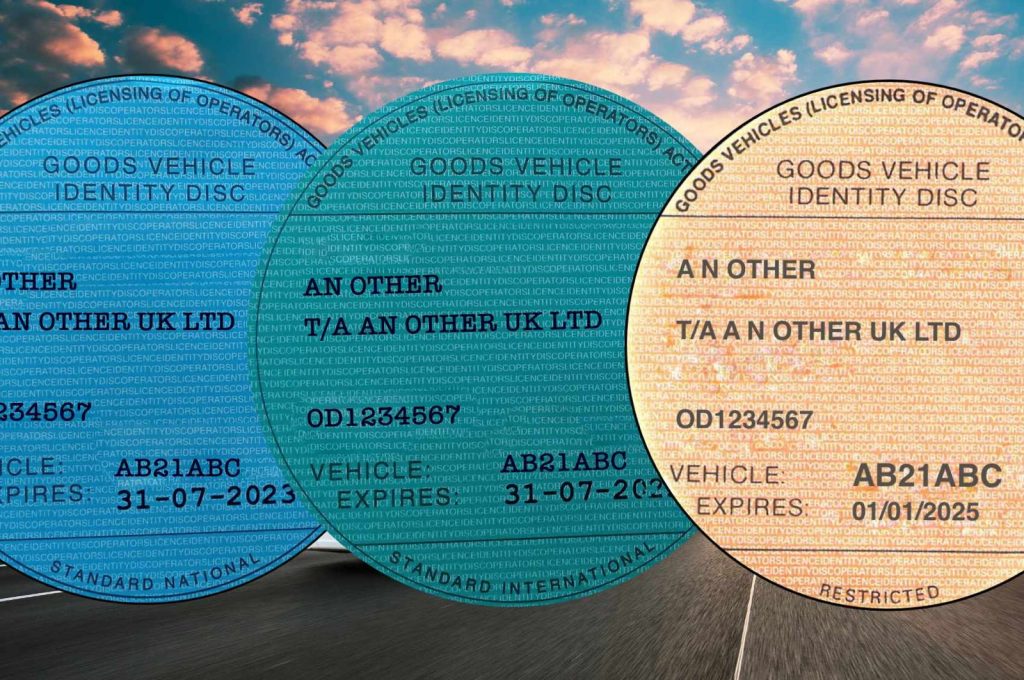
```Restricted licence
For businesses that carry their own goods, tools, equipment, plant or materials in connection with their own trade or business. A restricted licence does not mean light-touch compliance.
Standard National licence
For operators carrying goods for hire or reward within Great Britain. A professionally competent Transport Manager is required.
Standard International licence
For operators carrying goods internationally. This licence type involves additional requirements and needs careful preparation.
Where operator licence applications go wrong
Most application problems are avoidable. The issue is usually not the online form itself. The issue is missing, unclear or weak supporting evidence.
```Financial standing evidence
The funds must be in the correct name and genuinely available. Personal accounts for a limited company application can cause problems.
Public notice errors
Wrong newspaper, wrong wording, wrong dates, missing full-page evidence or incorrect vehicle numbers can invalidate the advert.
Weak maintenance arrangements
A vague garage arrangement is not enough. The operator needs proper inspection, repair, record and roadworthiness control.
Operating centre issues
The operating centre must have suitable access, space, permission and the right number of vehicles and trailers listed.
Transport Manager problems
Standard licences need a competent Transport Manager who accepts the role and can exercise continuous and effective management.
Operating too early
You must not operate before the licence is granted unless proper interim authority has been approved.
Financial standing: the evidence must match the applicant
Financial standing proves that the business has access to enough money to run the fleet properly. This is not just an application hurdle; it supports maintenance, safety and operator control.
```| Licence type | First vehicle | Each additional vehicle | Important evidence point |
|---|---|---|---|
| Restricted goods vehicle licence | £3,100 | £1,700 | Financial documents must be in the correct applicant/licence holder name. |
| Standard National goods vehicle licence | £8,000 | £4,500 | A Transport Manager is also required for standard licences. |
| Standard International goods vehicle licence | £8,000 | £4,500 | Light goods vehicles used internationally can have different financial standing levels. |
The newspaper public notice: small mistake, big delay
For HGV goods vehicle operator licence applications, the public notice is one of the easiest places to make a costly mistake.
```The advert must be placed in the correct local newspaper, use the correct wording, list the right operating centre address and vehicle/trailer numbers, and appear within the required 21-day window before or after the application.
- the newspaper is local to the operating centre area;
- the paper includes news stories and public notices, not just adverts;
- the wording follows the official template;
- the operating centre address is exact;
- the number of vehicles and trailers matches the application;
- the publication date falls within the 21-day window;
- you keep evidence of the full newspaper page showing the newspaper name and date.
Maintenance arrangements: the licence is not just permission to operate
The Traffic Commissioner needs confidence that vehicles will be kept roadworthy. If you are using an external maintenance provider, you need clear written arrangements.
```The DVSA Guide to Maintaining Roadworthiness includes an example maintenance contract in Annex 5. The operator should understand that using a maintenance contractor does not remove the operator’s legal responsibility for vehicle condition, records and standards.
- which vehicles and trailers are covered;
- the safety inspection frequency;
- who carries out inspections and repairs;
- how defects are reported and rectified;
- where maintenance records are kept;
- how inspection quality is monitored;
- what happens if a vehicle is taken off road or missed from the inspection plan.
Transport Manager requirements for standard licences
Standard National and Standard International licences require professional competence. That normally means a qualified Transport Manager who can exercise genuine, continuous and effective management of the transport operation.
```The Transport Manager role should not be treated as a name on a form. The person nominated must understand the operation, have enough time to manage it properly and be able to demonstrate control if questioned.
Need the qualification?
Transcom provides Transport Manager CPC training and exam support for those working towards professional competence.
Already qualified?
Our Transport Manager CPC Refresher helps existing Transport Managers update their knowledge and strengthen operator licence control.
New to the role?
Role Readiness support can help a newly qualified or newly appointed Transport Manager understand what the role looks like in practice.
Application process: step by step
A better-prepared application usually stands a better chance of moving through without avoidable questions, delays or rework.
```-
Check whether you need a licence.
Confirm the vehicle type, weight, journey type, goods carried and whether any exemption applies. -
Choose the right licence type.
Restricted, Standard National and Standard International licences exist for different types of operation. -
Prepare financial standing evidence.
Make sure the evidence is in the right name and supports the vehicle authority you are applying for. -
Confirm the operating centre.
Check permission, capacity, access, parking arrangements and the number of vehicles and trailers requested. -
Set up maintenance arrangements.
Put proper inspection, repair and record systems in place before submitting. -
Prepare the public notice where required.
Use the correct wording, correct newspaper and correct timing. -
Submit through the VOL system.
Upload accurate supporting evidence and respond promptly to any questions. -
Do not operate too early.
Wait for the licence to be granted unless interim authority is approved.
How Transcom National Training helps
Transcom National Training supports operator licence applicants who want to get the application prepared properly before submission.
```We are not just looking at the form. We look at the compliance picture behind the application: financial standing, licence type, operating centre information, maintenance arrangements, public notice risk and the responsibilities that come after grant.
- licence type guidance;
- VOL application support;
- application detail checks;
- financial standing guidance;
- operating centre information review;
- public notice guidance;
- maintenance arrangement guidance;
- supporting document review;
- pre-submission checks;
- guidance on common application delays;
- practical explanation of restricted and standard licence responsibilities.
You are not just buying form-filling. You are getting practical support from a transport compliance training provider that understands operator licensing, Transport Manager CPC, OLAT and the risks that sit behind the application.
Once the licence is granted, the real responsibility starts
Getting the licence granted is not the finish line. It is the point where the operator’s promises become live responsibilities.
```Operators must keep vehicles roadworthy, manage drivers properly, monitor records, investigate issues, control maintenance, keep evidence and meet the undertakings given to the Traffic Commissioner.
Directors and owners
Operator Licence Awareness Training helps responsible people understand the obligations attached to the licence.
Drivers
Driver CPC training supports safer, more professional drivers who understand compliance expectations.
Operators
A compliance audit can help identify weak systems before they become enforcement problems.
Application FAQs
```How long does an operator licence application take?
GOV.UK says you will usually get a decision within 7 weeks, but it can take longer if the right supporting documents are not provided. Poor preparation, public notice mistakes and weak evidence can all cause delay.
Can I operate while waiting for my operator licence?
No, not unless interim authority has been granted. It is illegal to operate before the licence has been issued. For goods vehicle applications, you can ask for interim authority as part of a full application, but it is not automatic.
Do I need a Transport Manager?
Standard National and Standard International licences require professional competence, normally through a qualified Transport Manager. Restricted licences do not require a Transport Manager, but restricted operators still have serious compliance responsibilities.
Why do operator licence applications get delayed?
Common problems include wrong licence type, weak financial standing evidence, incorrect public notice wording, missing full-page newspaper evidence, unclear operating centre information, missing maintenance arrangements and poor supporting documents.
Can Transcom guarantee that my licence will be granted?
No. No responsible provider should guarantee a Traffic Commissioner decision. What we can do is help you prepare the application properly, understand the evidence required and reduce avoidable mistakes before submission.
Is the £299 + VAT fee the same for Restricted, Standard National and Standard International applications?
Yes. Our Operator Licence Application Assistance fee is one clear price for those licence types. DVSA fees, licence issue fees, interim licence fees, newspaper advert costs and other third-party costs are separate.
Can Transcom help nationwide?
Yes. We provide remote operator licence application assistance and online compliance training, so applicants do not need to be local to us to get support.
```Applying for an operator licence?
Get your application checked before a simple oversight becomes a delay.
```Transcom National Training can help you prepare the application, understand the evidence, avoid common mistakes and start your operator licence journey with stronger compliance foundations.
```Official guidance and useful links
- GOV.UK — Apply for a vehicle operator licence
- GOV.UK — Being a goods vehicle operator
- GOV.UK — Financial evidence for an operator licence
- GOV.UK — Advertising your application
- GOV.UK — Goods vehicle operator licence newspaper advert template
- GOV.UK — Guide to Maintaining Roadworthiness
- GOV.UK — Vehicle operator licence application processing times
This page is for general operator licence application guidance and Transcom National Training service information. It is not legal advice. The final decision on an operator licence application sits with the Traffic Commissioner. Operators should check current official guidance before applying.