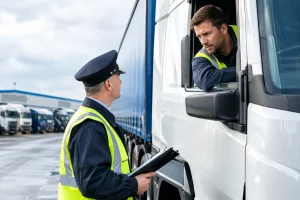
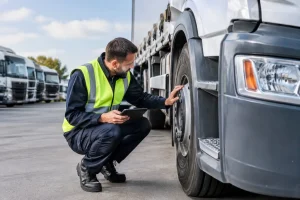
A vehicle parked in the yard can still create an operator licence risk. If maintenance intervals are missed, a driver defect is not acted on, or a nominated Transport Manager is not genuinely overseeing the operation, the consequences may emerge long before a roadside stop. Operator licensing is therefore not an administrative task completed when a business starts. It is the framework that determines whether a goods vehicle operation is fit to continue.
For directors, licence holders and Transport Managers, the practical question is simple: can you demonstrate control of your operation when asked? That means having the right licence, meeting its undertakings and retaining evidence that systems work in practice.
Operator licensing starts with the right licence
In Great Britain, businesses using goods vehicles above 3.5 tonnes gross plated weight normally need an operator licence. The licence is issued to the legal entity or individual operating the vehicles, not simply to the person who owns them. Hiring, leasing or borrowing a vehicle does not remove that responsibility.
The appropriate licence depends on the work being undertaken. A restricted licence is generally for operators carrying their own goods in connection with their business. It is not intended for hire or reward work. A standard national licence permits the carriage of other people’s goods for hire or reward within the UK, while a standard international licence is required where the operation extends beyond the UK under the relevant international arrangements.
Choosing the wrong category is not a minor paperwork issue. It can restrict legitimate work, undermine an application and expose the operator to enforcement action. The licence must also authorise enough vehicles and, where applicable, trailers for the fleet actually being used. Adding capacity before it is needed is not always sensible, but operating beyond authorised numbers is a clear compliance failure.
There are separate rules for passenger vehicle operations. Businesses should not assume that a goods vehicle licence automatically covers a passenger-carrying activity, even where the same premises, directors or maintenance provider are involved.
The undertakings are the operating standard
When a licence is granted, the operator gives formal undertakings. These are commitments to run vehicles safely and lawfully, not statements of future intent that can be filed away. Traffic Commissioners expect operators to understand what each undertaking means in their own business and to put proportionate controls behind it.
Maintenance is usually where the evidence trail is tested most closely. A workable system includes planned safety inspections at an appropriate frequency, competent inspection and repair arrangements, recorded driver walkaround checks, defect reporting, clear defect rectification and proper vehicle records. A signed inspection sheet is not enough if the underlying condition of the vehicle, repair history or inspection quality tells a different story.
The interval between safety inspections must reflect the vehicle’s age, use, mileage, operating environment and condition. A lightly used vehicle may justify a different schedule from a heavily worked lorry on demanding local work. However, reducing inspection frequency simply because a fleet is busy or budgets are tight is difficult to defend.
Other undertakings require the operator to keep vehicles fit and serviceable, observe drivers’ hours and tachograph rules where they apply, notify material changes, maintain an effective operating centre and ensure appropriate financial standing. The common thread is control. An operator must know what is happening, intervene when something goes wrong and show that corrective action was taken.
A Transport Manager must have real authority
A standard licence requires a professionally competent Transport Manager. The role cannot be reduced to lending a qualification or signing forms for a business that makes its own decisions without them. The Transport Manager must be able to exercise continuous and effective management of the transport operation.
In a well-run business, that authority is visible. The Transport Manager can access maintenance records, question missed inspections, challenge unrealistic schedules, review infringements, deal with driver performance and raise risks directly with the licence holder or directors. They know the fleet, the operating centre, the nature of the work and the people responsible for daily decisions.
The level of involvement will depend on fleet size, complexity, geographic spread and risk. A small owner-operated fleet does not need the same structure as a multi-site operation, but it still needs meaningful management. External Transport Managers can provide a legitimate solution where properly appointed and sufficiently resourced. They must not be used as a paper arrangement when the operator has no day-to-day compliance discipline.
Directors should also understand that delegating tasks does not delegate accountability. A Transport Manager may manage the system, but the operator remains responsible for funding it, supporting it and acting on the issues identified.
Evidence matters as much as intention
Most operators believe they take safety seriously. At an audit, investigation or public inquiry, that belief carries little weight without records. The question becomes: what happened, when did it happen, who reviewed it and what was done next?
Useful evidence is organised, current and capable of being traced. It may include safety inspection reports, defect records, invoices, brake test results, driver licence checks, training records, tachograph analysis, working time records, internal review notes and correspondence about remedial action. Digital systems can make retrieval easier, but software does not create compliance by itself. Someone still needs to review exceptions and close the loop.
A recurring issue should never be treated as an isolated event merely because each individual record has been signed off. Repeated tyre defects, overdue inspections, persistent tachograph infringements or late defect repairs point to a system problem. Senior management must receive that information in a form that allows decisions to be made before enforcement action forces the issue.
A regular compliance review should test whether written policies reflect real practice. Ask whether inspections occur when planned, whether drivers understand defect procedures, whether agency or occasional staff are properly controlled, and whether the Transport Manager has sufficient time and authority. These questions are more valuable than a folder of untouched policies.
Changes to the operation need early action
Operator licensing is not static. Moving an operating centre, increasing vehicle numbers, changing the legal entity, appointing a new Transport Manager or altering the nature of the work can all have licensing implications. Some changes require a formal application or variation, while others must be notified within the required timeframe.
The safest approach is to assess the licensing position before commercial commitments are made. A new depot may look operationally convenient but prove unsuitable because of access, environmental concerns, vehicle parking arrangements or local objections. A contract may appear profitable until the fleet required to deliver it exceeds the authorised capacity or stretches maintenance provision beyond what is realistic.
Financial standing should be reviewed in the same way. It is not simply a figure needed for the initial application. Operators must be able to show continuing access to the required financial resources. A business facing cash pressure should deal with the issue early, rather than hoping it will not be examined.
How to keep control before an audit or investigation
Compliance is strongest when it is reviewed routinely, not rebuilt in response to a call from an enforcement body. A disciplined monthly review can be brief, but it should cover the issues that create the greatest risk: safety inspection completion, outstanding defects, maintenance trends, authorisation levels, driver hours performance, licence checks and any significant operational changes.
For a smaller operator, this may be a structured meeting between the licence holder and Transport Manager. For a larger fleet, it should include clear reporting lines, action owners and deadlines. What matters is that exceptions are understood and resolved, not that a meeting took place.
Independent support can be particularly useful after rapid growth, a change in management, a poor maintenance finding or a period where records have become inconsistent. A compliance health check can identify gaps while there is still time to correct them properly. Transcom National Training supports operators and directors with practical reviews that focus on evidence, responsibilities and workable improvements rather than generic paperwork.
The most dependable operator licence is built through ordinary decisions made well: a vehicle is not released with an unresolved safety issue, a missed inspection is investigated, a driver concern is acted upon and a director receives the information needed to intervene. That daily discipline is what protects the licence when it matters.