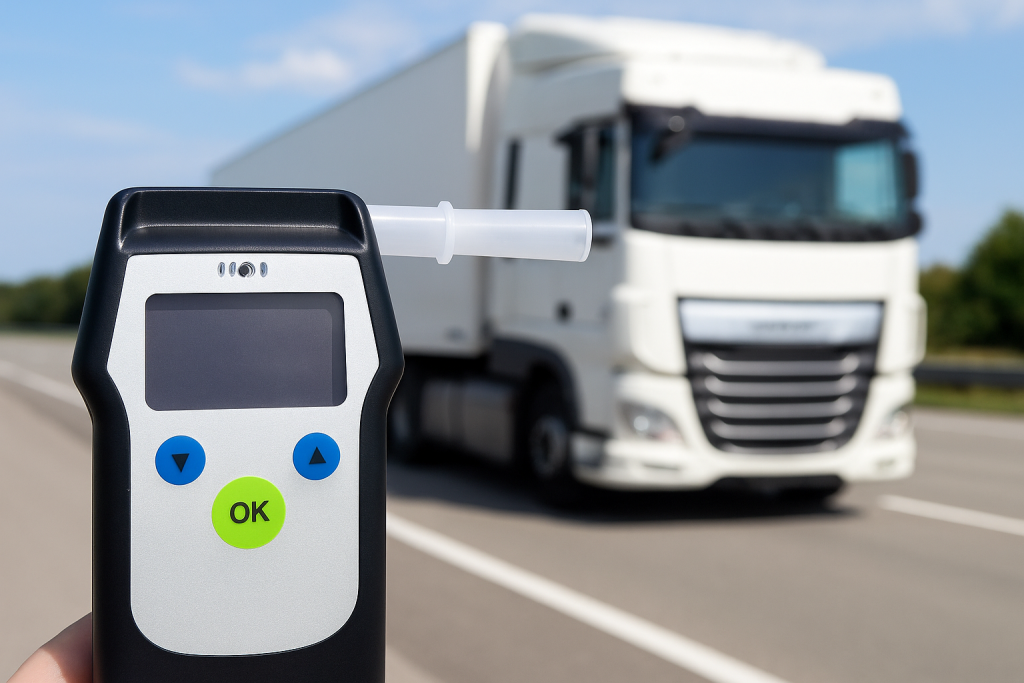
HGV, PSV and vocational driver compliance
Drink and Drug Driving: What the Law, DVSA and HSE Expect from Professional Drivers
Understanding the legal, safety and employer responsibilities for professional HGV and PSV drivers in the UK.
🚛 HGV & PSV drivers
⚖️ UK legal limits
🛡️ Operator compliance
📋 HSE employer duties
Why Drink and Drug Driving Are Critical Issues for Professional Drivers
For professional drivers, the consequences of drink or drug driving go far beyond fines or bans. A conviction can destroy a career, lead to the loss of vocational entitlement, and damage an operator’s repute.
Holding a vocational licence — Category C1, C1E, C, CE, D1, D1E, D or DE — means you are held to a higher standard under the law. DVSA, DVLA and Traffic Commissioners expect transport managers and operators to maintain strict control over driver fitness and behaviour.
Professional driver reality: drink or drug driving is not just a criminal offence. It is a serious breach of road safety, operator compliance and public trust.
The Health and Safety Executive explains that employers have a legal duty to protect employees’ health, safety and welfare. For transport operators, that includes managing the foreseeable risk of allowing anyone under the influence of alcohol or drugs to operate a vehicle.
The Legal Drink and Drug Driving Limits in the UK
The legal alcohol limits for driving vary across the UK, while limits for certain controlled drugs are set under road traffic legislation. Professional drivers should work to the strictest possible standard. In practice, that means a zero-tolerance approach to alcohol and drugs before or during duty.
Alcohol Limits
| Location / Standard |
Blood Alcohol Limit |
Breath Alcohol Limit |
Notes |
| England, Wales & Northern Ireland |
80mg per 100ml blood |
35 micrograms per 100ml breath |
Standard legal limit under drink-drive legislation. |
| Scotland |
50mg per 100ml blood |
22 micrograms per 100ml breath |
Lower drink-drive limit than the rest of the UK. |
| Professional / vocational drivers under operator policy |
20mg per 100ml blood |
9 micrograms per 100ml breath |
Common industry best-practice policy standard. Many operators apply stricter internal rules than the legal limit. |
Even small amounts of alcohol can impair judgement, reaction time and coordination. For a professional driver, the safest level is zero.
Drug Driving Limits
Drug driving laws apply to illegal drugs and prescription medications that can impair driving ability.
- Driving or attempting to drive while unfit through drugs covers any substance, legal or illegal, that impairs ability.
- Driving with certain controlled drugs in the body above specified limits is a strict-liability offence, even without visible impairment.
| Drug |
Limit |
Notes |
| Cannabis / THC |
2 µg/L blood |
Very low threshold. |
| Cocaine |
10 µg/L blood |
Very low threshold. |
| MDMA / Ecstasy |
10 µg/L blood |
Illegal drug limit. |
| Ketamine |
20 µg/L blood |
Illegal drug limit. |
| Benzoylecgonine |
50 µg/L blood |
Cocaine metabolite and common cause of positive drug-driving results. |
| Morphine |
80 µg/L blood |
May include legitimate prescription use, but impairment remains a serious risk. |
| Diazepam, Lorazepam and Temazepam |
Specified legal limits apply |
Prescription medicines may be lawful when taken correctly, but drivers must not drive while impaired. |
Even prescribed medication can make a driver unfit. Strong painkillers, sleeping tablets and anti-anxiety medication are common examples. Drivers taking medication that causes drowsiness, dizziness or delayed reaction times should speak to their GP or pharmacist and inform their employer immediately.
Penalties for Drink and Drug Driving
Drink and drug driving carry serious criminal penalties. For vocational drivers, a conviction can also put their professional entitlement and employment at risk.
- Driving or attempting to drive while over the alcohol or drug limit: up to 6 months in prison, an unlimited fine, and a minimum 12-month driving ban.
- Being in charge of a vehicle while over the limit: possible imprisonment, a fine, and a possible driving ban.
- Refusing to provide a specimen: treated seriously and can result in a ban, fine and imprisonment.
- Causing death by careless driving under the influence of drink or drugs: the most serious consequences, including a long driving ban and potential imprisonment.
Career warning: endorsement codes such as DR10 or DG10 can remain visible for years. For vocational drivers, that can make future employment extremely difficult.
Employer and HSE Responsibilities
The HSE expects employers to take reasonable steps to manage drug and alcohol risks at work. For transport operators, that means having clear policies, checking driver fitness, training staff, and acting when there are warning signs of substance misuse.
- Include alcohol and drug risks in workplace and driving-for-work risk assessments.
- Define disciplinary procedures for breaches of alcohol and drug policy.
- Provide regular training and awareness on the risks of drink and drug driving.
- Support drivers who voluntarily disclose dependency issues and seek help.
- Make sure managers know when to remove a driver from duty if fitness to drive is in doubt.
Operator compliance point: allowing a driver under the influence to work can create road safety, employment, HSE and operator licensing consequences.
DVSA, DVLA and Fitness to Drive
DVSA enforces road safety and driver conduct standards. Serious or repeated drink and drug driving issues can also create problems for the operator, especially where management controls are weak.
DVLA assesses medical fitness to drive. A driver with alcohol or drug misuse or dependence may need to notify DVLA, and vocational entitlement can be suspended or revoked until the driver is medically fit.
Operators and transport managers should monitor driver conduct and take proactive steps to make sure drivers are fit to drive. Warning signs can include erratic behaviour, unexplained absences, near misses, complaints, poor timekeeping or signs of impairment before duty.
Best Practice for Drivers and Operators
- Never drive after consuming alcohol or using drugs.
- Remember the “morning after” effect — alcohol and some drugs can remain in the system for many hours.
- Declare any prescription medication that could affect driving.
- Adopt a zero-tolerance policy to alcohol and drugs before or during work.
- Report fitness-to-drive concerns about yourself or a colleague to the transport manager.
- Provide or attend awareness training.
- Enable confidential support or rehabilitation routes where appropriate.
Summary
Drink and drug driving destroy careers, businesses and lives. For professional drivers, the only safe limit is zero. Staying within the law is not enough; DVSA, HSE, DVLA and Traffic Commissioners expect drivers, transport managers and operators to manage fitness to drive properly.
Protect your licence, protect your livelihood, and protect the public. Do not drink or drug drive.
References and Further Reading