Why ongoing help matters after your licence is granted
Restricted operator licence compliance support is becoming increasingly important for small businesses that run HGVs under a restricted licence but do not have a full-time transport manager.
Getting the licence granted is only the start. The real challenge is keeping the operation controlled month after month.

- What restricted operator licence compliance support means
- Why restricted operators get caught out
- How direct access to an experienced Transport Manager can help
- What ongoing support includes
- When to ask for help
A restricted operator licence may not require a nominated transport manager, but it still brings serious responsibilities. That is why many builders, scaffold companies, plant operators, drainage contractors and other own-account operators need practical ongoing help to stay organised, reduce avoidable risk and keep better control of their operator licence obligations.
What is restricted operator licence compliance support?
Restricted operator licence compliance support is ongoing practical help for businesses that hold a restricted operator licence and need support managing the compliance side of their operation.
It is not the same as appointing a nominated transport manager. It is not a one-off training course. It is structured support designed to help the operator keep better control of maintenance records, defect reporting, compliance actions and day-to-day operator licence responsibilities.
For many restricted operators, this fills the gap between knowing they have legal responsibilities and having the time, experience or internal structure to manage them properly.
Why getting the licence is only the start
Many businesses put a lot of effort into getting their operator licence application approved. That makes sense. The application process can feel technical, unfamiliar and time-consuming.
But the real responsibility begins once the licence is granted. From that point onwards, the operator has to prove that the vehicles are being operated safely, maintained properly and controlled in line with the licence undertakings.
The issue is not just whether a system exists on paper. The issue is whether the system is actually working.
Restricted operator licence responsibilities: what still needs to be controlled
A restricted operator licence does not remove the need for proper compliance systems. Operators still need to control areas such as:
- vehicle maintenance planning
- safety inspections
- driver defect reporting
- defect rectification
- recordkeeping
- operating centre control
- vehicle use
- internal review of compliance arrangements
- evidence that systems are being followed
This is where restricted operators often underestimate the work involved. They may have a garage, inspection sheets and drivers completing walkaround checks. But if nobody is reviewing the system properly, weaknesses can build quietly in the background.
Why restricted operators get caught out
Most compliance problems do not appear overnight. They usually build slowly.
A safety inspection gets missed. A defect is reported but not followed through properly. A driver completes a check sheet badly. Maintenance paperwork is stored but never reviewed. The business relies too heavily on a garage and assumes everything is under control.
Then something triggers attention: a roadside stop, a DVSA encounter, a maintenance issue, an MOT failure, a complaint, a request for records or a Traffic Commissioner concern.
At that point, good intentions are not enough. The question becomes: can the operator show that the operation was properly controlled?
Operator licence compliance without a transport manager
One of the biggest challenges for restricted licence holders is managing operator licence compliance without a transport manager.
A restricted licence may not require a nominated transport manager, but that does not mean the responsibilities disappear. For many small businesses, employing a full-time transport manager is not realistic. The business may only run one, two or three vehicles.
This is where restricted operator licence compliance support becomes a practical middle ground.
More than a course. Less than a full-time transport manager.
It gives restricted operators access to regular review, practical guidance and a more structured way to keep control of the transport side of the business.
Direct access to an experienced Transport Manager
One of the main benefits of Transcom’s ongoing support is the opportunity to consult directly with an experienced Transport Manager.
Many restricted operators do not need a full-time transport manager, but they do need someone experienced to speak to when they are unsure.
That might involve questions about maintenance planning, defect reporting, recordkeeping, operating centre arrangements, vehicle changes, compliance responsibilities or whether current systems are strong enough.
Generic advice is not always enough. Restricted operators need practical guidance from someone who understands operator licence compliance in the real world, not just in theory.
What ongoing restricted operator compliance support includes
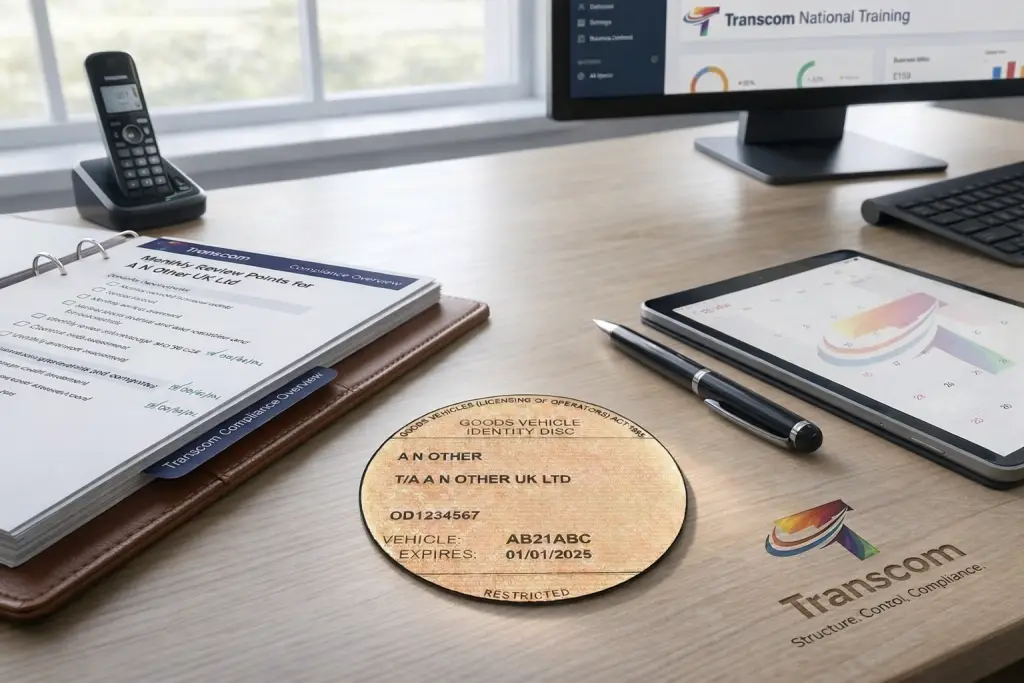
Transcom’s restricted operator compliance support is designed to provide structure, oversight and practical monthly support.
- initial onboarding review
- review of current compliance arrangements
- monthly compliance review
- review of agreed records and documents
- action tracking and follow-up
- support with day-to-day compliance questions within scope
- written summary after each review
- ongoing oversight to help keep the operation organised
This is not vague consultancy sitting in the background. It is a practical support structure designed to help restricted operators stay on top of what matters.
Need restricted operator compliance support?
Transcom provides structured monthly support for restricted operator licence holders, including record review, action tracking and direct guidance from experienced Transport Managers.
A cost-effective way to reduce avoidable compliance risk
For many restricted operators, the cost of poor control is not just regulatory. Weak compliance systems can also create avoidable operational cost.
Poor maintenance control can lead to downtime. Weak defect reporting can allow faults to build. Scattered records can waste time. Reactive decisions can become expensive.
Ongoing compliance support can help reduce avoidable cost by improving visibility and helping operators act earlier. It does not guarantee that problems will never happen, but it can help operators spot weaknesses sooner, make better decisions and avoid leaving issues until they become urgent.
Who this support is designed for
Restricted operator licence compliance support is especially useful for small own-account operators who run vehicles to support their main business.
- builders
- construction companies
- scaffold companies
- plant hire businesses
- drainage contractors
- utility businesses
- agricultural operators
- small restricted HGV fleets
Why specialist support matters
Not all compliance support is equal. Some providers treat compliance training as a volume product. Others operate more like brokers, passing work through rather than delivering specialist support directly.
For restricted operators, this matters. The issue is not just whether someone can explain the rules. The real question is whether the support helps the operator apply those rules inside the actual business.
The 2026 operator licence compliance standard
Operator licence compliance expectations continue to focus on systems, evidence, record control and effective management.
For restricted operators, the message is simple: you cannot rely on good intentions. You need systems that work, records that support what you are doing, and enough oversight to spot when things are starting to slip.
When should a restricted operator ask for help?
A restricted operator should consider getting help if:
- they have recently been granted a licence
- they are unsure whether their systems are strong enough
- they rely heavily on a garage but do not review records internally
- they have had maintenance issues or MOT problems
- defect reporting is inconsistent
- records are difficult to locate or understand
- nobody is regularly checking compliance arrangements
- they want support without employing a full-time transport manager
- they want direct access to experienced Transport Manager guidance
The best time to get support is before problems become formal. Waiting until DVSA or the Traffic Commissioner is already involved usually makes the situation harder, more stressful and more expensive to deal with.
How Transcom supports restricted operator licence holders
Transcom’s restricted operator compliance support service is built for small restricted operators who need more than a course, but less than a full-time transport manager.
The support includes structured monthly oversight, record review, practical guidance and action tracking. The base support package starts from £195 + VAT per month for restricted operators with one to two vehicles. Additional vehicles can be added separately.
The service is designed to help licence holders improve control, keep better visibility over records and responsibilities, and reduce the risk of compliance problems being left to build in the background.
Restricted operator compliance support FAQs
Do restricted operator licence holders need a transport manager?
A restricted operator licence does not usually require a nominated transport manager, but the operator still needs to control compliance responsibilities properly.
What is restricted operator licence compliance support?
It is structured ongoing support designed to help restricted operators manage records, maintenance oversight, defect reporting, action tracking and practical compliance questions.
Is this the same as Operator Licence Awareness Training?
No. Training helps you understand the responsibilities. Ongoing support helps you keep reviewing and applying those responsibilities inside the business.
Can I consult directly with a Transport Manager?
Yes. A key part of Transcom’s support is the opportunity to consult directly with an experienced Transport Manager about practical compliance issues.
Final thoughts
A restricted operator licence may not require a nominated transport manager. But it still requires control.
Getting the licence granted is only the beginning. The real test is whether the operator can run the licence properly month after month, with systems that work and records that show what is happening.
For many restricted operators, ongoing support is the practical middle ground: more than a one-off course, less than a full-time transport manager, and a structured way to stay better organised, better supported and better prepared.
Get ongoing restricted operator compliance support
Speak directly with experienced Transport Managers and put a stronger monthly structure around your restricted operator licence compliance.