
Bridge Strikes UK | Vehicle Height Calculator & Prevention Guide
Bridge strike prevention for UK operators and drivers Bridge Strikes: Nobody Means to Hit a Bridge — But It Still Happens No professional driver starts


How Hard Is It to Pass the Transport Manager CPC Exam? (Realistic Guide)
The Transport Manager CPC is achievable — but it’s widely underestimated. This guide explains what actually makes it hard, which myths cause most failures, and what improves pass chances, especially on the case study paper.
If you’re Googling “how hard is it to pass the Transport Manager CPC exam?”, here’s the honest answer: it’s not impossible, but it’s not easy — and it’s not a box-ticking exercise.
Most failures are not down to lack of ability. They come from underestimating the scope and not practising exam technique, especially on the case study paper.
Yes. Most candidates find it challenging because it is broad and assessed under strict exam conditions. It covers legal rules, compliance systems, operational planning, management control, and finance or costing.
These beliefs cause a lot of avoidable failures:
Reality: The case study is incredibly time-pressured. You need to know exactly where the information is and how to apply it. Open-book is for confirming specifics (like a tariff rate or driver rule), not for learning a topic during the exam.
Reality: The exam marks what is legally correct and complete, not “how we do it at my yard”. Structure, legal accuracy, and answering the specific question are what score marks.
Reality: UK-only candidates can still see international-related syllabus areas. Skipping them means giving marks away.
You are expected to apply knowledge across areas like:
Two specific areas consistently trip candidates up on the case study paper:
Candidates often know the topic but still lose marks because they do not answer the exact requirement. High scores usually come from short, structured answers that hit marking points. We teach that exact methodology on our 5-Day Live Online Transport Manager CPC Courses.
Many UK-only candidates are surprised that they still need to understand some cross-border concepts and documentation (such as CMR notes and international permits). The safest approach is to prepare across the full syllabus, not just the parts that feel immediately relevant to your current role.
Official overview: Qualifying as a transport manager
The CPC assessment is typically delivered in two parts, and you need a proper strategy for both. Exact timings, structure, and pass arrangements can vary by awarding organisation and sitting, so prepare for the version you are actually booked onto.
Awarding body example: SEG Awards Road Haulage CPC
These habits are what usually move results from a fail to a pass:
Use sticky tabs to find key sections quickly. If it takes you a minute to find a specific drivers' hours rule, you will lose time you do not have in the case study.
Sit at a desk, set a timer, and finish a past paper. Timed drills build pace as well as knowledge. The shock of the ticking clock is what breaks many candidates on exam day.
Write each step of your vehicle costing or route scheduling. Even if the final figure is wrong due to a calculator slip, method marks may still be awarded if your logic is correct.
If a question is worth 4 marks, the examiner usually wants around 4 distinct points. Give them 4 clear, numbered points, not a sprawling essay.
If you are qualifying as a Transport Manager, make sure you are booking the correct route for your intended operation. The exam content and scenarios need to match the sector you are entering.
Book the exam or exams you need without buying a full package:
Yes. Most candidates find it challenging because it is broad and tests application under time pressure. Technique and timed practice are usually the difference-makers.
Yes. UK-only candidates can still see international-related syllabus areas. Preparing across the full syllabus is the safest route.
Most candidates struggle more with the case study because it tests application, structure, and time management. An open-book format does not remove the need for technique.
Timed practice and bullet-point answers that directly hit marking points. If you want technique coaching, use an Exam Preparation Day.
Choose Road Haulage CPC for goods vehicle operations and PCV CPC for passenger operations. Match it to the type of Operator Licence you intend to manage.
Treat the CPC as a professional qualification. Build a plan, practise timed questions, and learn how marks are awarded, especially on the case study.
Awarding body example: SEG Awards Road Haulage CPC

Bridge strike prevention for UK operators and drivers Bridge Strikes: Nobody Means to Hit a Bridge — But It Still Happens No professional driver starts
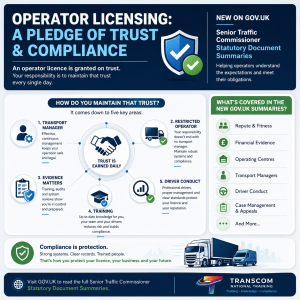
Operator Licence Compliance • Good Repute • Traffic Commissioner Guidance Good Repute Operator Licence: What It Means and Why the New Traffic Commissioner Summaries Matter
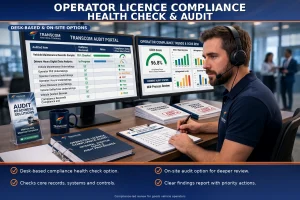
Operator Licence Compliance A letter from the Traffic Commissioner rarely arrives out of nowhere. Most operators do not lose control overnight. Standards usually slip through
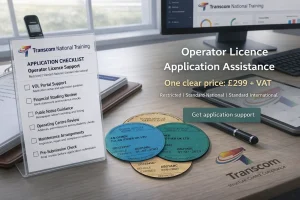
Operator Licence Application Support Applying for an Operator Licence? Why Experienced Support Can Save You Weeks of Delay Applying for an operator licence can look

Restricted operator licence compliance support Why ongoing help matters after your licence is granted Restricted operator licence compliance support is becoming increasingly important for small

PCV / PSV Transport Manager CPC Online | Home Study, Remote Exams & Tutor Support Passenger Transport CPC Guide PCV / PSV Transport Manager CPC