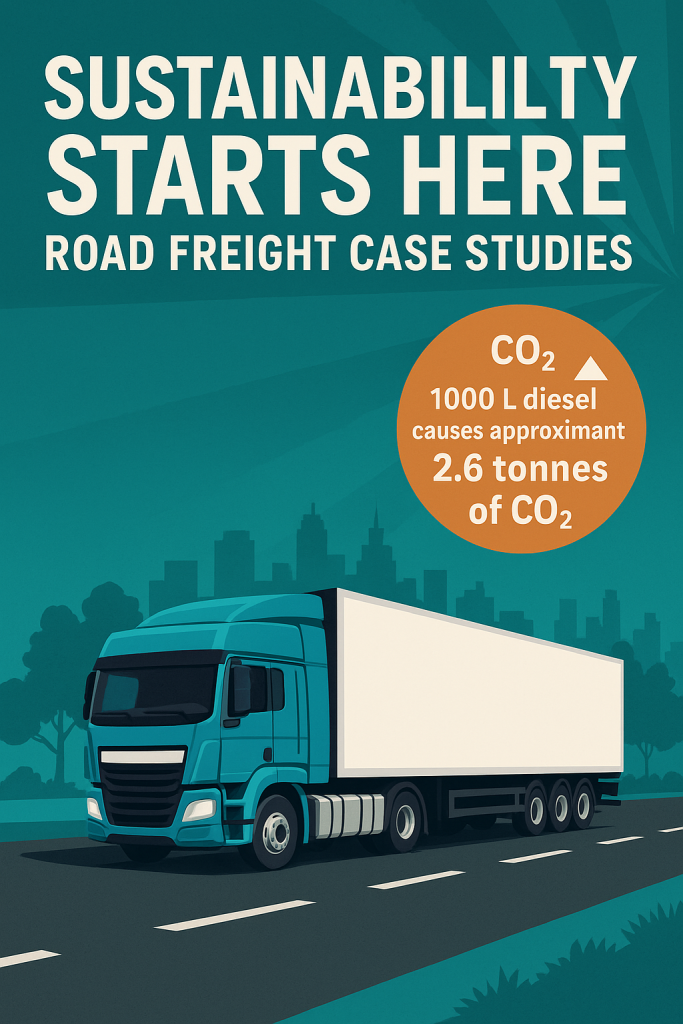
Sustainable Road Transport Starts Before the Engine Turns
Sustainability in road transport is not just about electric vehicles, alternative fuels or the latest fleet technology. It starts with better decisions, better planning, better driver behaviour and smarter training.
For many operators, one of the quickest and most practical improvements is also one of the simplest: reduce unnecessary travel, improve driver knowledge and build compliance training around real operational standards. That is where live online training can make a real difference.
Why sustainability is now an operational issue
Road transport is under pressure to reduce emissions, improve efficiency and demonstrate stronger environmental responsibility. That pressure is not going away.
```Operators are already dealing with fuel costs, clean air zones, customer sustainability requirements, vehicle replacement decisions, driver shortages, compliance standards and tighter expectations from clients and enforcement bodies.
The mistake is treating sustainability as a separate “green project”. In a transport business, sustainability is operational. It sits inside route planning, driver behaviour, vehicle checks, maintenance standards, fuel control, training, management and leadership.
Less waste
Better planning and better driver behaviour reduce wasted mileage, idling, avoidable fuel use and unnecessary vehicle wear.
Better compliance
Sustainable operations are usually better-controlled operations: planned, recorded, reviewed and actively managed.
Stronger reputation
Customers increasingly expect operators and suppliers to take environmental responsibility seriously.
Online training reduces unnecessary travel
Traditional classroom training often means drivers, managers or directors travelling to a venue, parking vehicles, losing productive time and sometimes arranging overnight stays.
```Live online training removes much of that waste. Learners can attend from home, the workplace or another suitable location without travelling to a training centre. For national operators or businesses with drivers in different areas, that can be a major practical advantage.
- no unnecessary travel to a classroom venue;
- less lost time for drivers and managers;
- easier access for learners across England, Scotland, Wales and Northern Ireland where the course rules allow;
- consistent training standards across different sites and depots;
- simpler planning for operators with mixed shifts or remote teams;
- reduced printing, postage and venue-related waste;
- live tutor interaction without the disruption of travelling to a course.
Online training should not mean passive training. The strongest model is live, tutor-led training where learners can ask questions, discuss real transport examples and relate the content to their own role.
```Why partner with Transcom National Training?
Transcom National Training is not trying to be a generic training factory. Our focus is transport compliance, professional driver development, operator licence awareness and Transport Manager standards.
```The value of partnering with Transcom is that the training is built around real road transport experience, practical compliance expectations and the pressures operators actually face.
Real industry experience
Training is delivered with an understanding of life on the road, fleet operations, operator licence expectations and the reality of managing compliance.
Nationwide online access
Live online delivery helps operators train drivers, managers and directors without being limited by location.
Compliance-led delivery
Courses are designed to support safer decisions, better records, stronger standards and more confident compliance management.
Driver CPC and fuel-efficient driving
Driver behaviour has a direct impact on fuel use, emissions, vehicle wear and safety. Harsh acceleration, poor anticipation, unnecessary idling, weak journey planning and poor vehicle checks all add cost.
```A fuel-efficient driving and health and safety module can help drivers understand how professional driving technique links to operating costs, emissions and road safety.
- smooth acceleration and progressive braking;
- anticipation and hazard awareness;
- reducing unnecessary idling;
- load-conscious driving;
- vehicle checks and defect reporting;
- route planning and avoidable mileage;
- driver wellbeing, fatigue and safer decision-making.
This is where sustainability and safety meet. Better driving technique is not just greener. It can also reduce stress, lower wear and tear, improve professionalism and support a stronger safety culture.
```Transport Managers need sustainability awareness too
Sustainable transport is not only a driver issue. Transport Managers and operators influence the system that drivers work inside.
```A driver can be trained to drive more efficiently, but the benefit is limited if the operation still creates unrealistic schedules, poor route planning, repeated waiting time, weak maintenance control or unnecessary empty running.
| Area | Sustainability link | Compliance link |
|---|---|---|
| Route planning | Reduces wasted mileage, fuel use and driver downtime. | Supports realistic schedules, breaks and fatigue management. |
| Vehicle checks | Well-maintained vehicles tend to operate more efficiently. | Supports roadworthiness and operator licence compliance. |
| Driver training | Improves driving style, fuel awareness and hazard anticipation. | Supports Driver CPC, safety standards and professional conduct. |
| Management review | Helps identify repeated waste, poor planning and avoidable cost. | Provides evidence of active management and continuous improvement. |
Electric vehicles, alternative fuels and grants: useful, but not the whole answer
Electric vehicles, depot charging, alternative fuels and cleaner fleet technology all have a role to play in the future of road transport.
```However, not every operator can change the fleet overnight. Vehicle availability, range, payload, infrastructure, charging time, contract type, operating centre layout and cost all affect what is realistic.
Government grants and funding schemes can also change over time. Operators considering zero-emission vehicles, trucks, vans or depot charging should check current GOV.UK guidance before making decisions.
Online training is good for small operators too
Sustainability is often discussed as if only large national fleets can do anything meaningful. That is wrong.
```Smaller operators may not have the budget for large-scale fleet replacement, depot charging or advanced telematics. But they can still improve how they train, plan, supervise and review.
Lower disruption
Online courses reduce the need to take people off the road for a full day of travel as well as training.
Better access
Operators can access specialist transport training without needing a provider on the doorstep.
Controlled cost
Online delivery helps reduce travel, accommodation, venue and downtime costs around training.
How Transcom can support a more sustainable training plan
A good training partner should help you do more than tick a box. Training should support safer drivers, stronger management, better decision-making and a culture where compliance is understood rather than guessed.
```-
Driver CPC training
Live online 7-hour Driver CPC modules help professional drivers build periodic training hours while covering practical topics linked to safety, compliance and driver behaviour. -
Transport Manager CPC Refresher training
Refresher training helps Transport Managers stay sharp on compliance responsibilities, operator licence expectations and the management systems that sit behind safe operations. -
Operator Licence Awareness Training
OLAT helps directors, business owners and responsible people understand the licence obligations that affect the whole operation. -
Compliance audits and support
A compliance health check can help operators identify weak systems, wasted effort, poor records and risks before they become bigger problems.
What a practical sustainability training plan could include
A simple training plan can support both compliance and environmental performance.
```| Training need | Who needs it? | Operational benefit |
|---|---|---|
| Fuel-efficient and safe driving | Professional HGV and PCV drivers | Improves driving behaviour, fuel awareness, hazard anticipation and vehicle sympathy. |
| Drivers’ hours and working time awareness | Drivers, planners and supervisors | Supports better planning, fewer avoidable infringements and better fatigue control. |
| Walkaround checks and defect reporting | Drivers and supervisors | Supports roadworthiness, reduces avoidable downtime and improves maintenance control. |
| Transport Manager Refresher | Transport Managers and compliance leads | Strengthens management oversight, systems review and operator licence protection. |
| Operator Licence Awareness Training | Directors, owners and responsible persons | Helps leadership understand the standards expected of a compliant transport operation. |
The real business case for online transport training
The environmental case is clear: less unnecessary travel, less disruption and fewer venue-related resources. But the business case is just as important.
```- Drivers can train from suitable locations without long-distance travel.
- Operators can access specialist transport training nationwide.
- Managers can plan training around operational needs more easily.
- Multi-site businesses can keep training standards consistent.
- Small operators can access professional support without inflated costs.
- Live online sessions keep the human interaction that poor-quality e-learning often lacks.
Sustainability does not have to mean overcomplicating the operation. Sometimes it starts by removing waste from the way people are trained, managed and supported.
Train smarter. Reduce waste. Strengthen compliance.
Transcom National Training provides live online transport training for professional drivers, Transport Managers, operators and directors across the UK.
```If you want training that supports sustainability, safety and compliance without unnecessary travel or classroom disruption, Transcom can help you build a more practical training plan.
```References and official guidance
- GOV.UK — Transport decarbonisation plan
- GOV.UK — UK pledge for zero-emission HGVs by 2040
- GOV.UK — Depot Charging Scheme
- GOV.UK — Zero emission vehicles eligible for a grant
- GOV.UK — Driver CPC training for qualified drivers
- GOV.UK — Driver CPC course approval and remote delivery rules
- GOV.UK — Greenhouse gas conversion factors for company reporting
This article is for general transport training, sustainability and compliance awareness only. Grant schemes, emissions factors and vehicle eligibility can change, so operators should check current official guidance before making investment decisions.